
Services
Structured cabling
The cable behind everything else — network, audio, video and control runs, labeled and terminated at a rack you can work on.
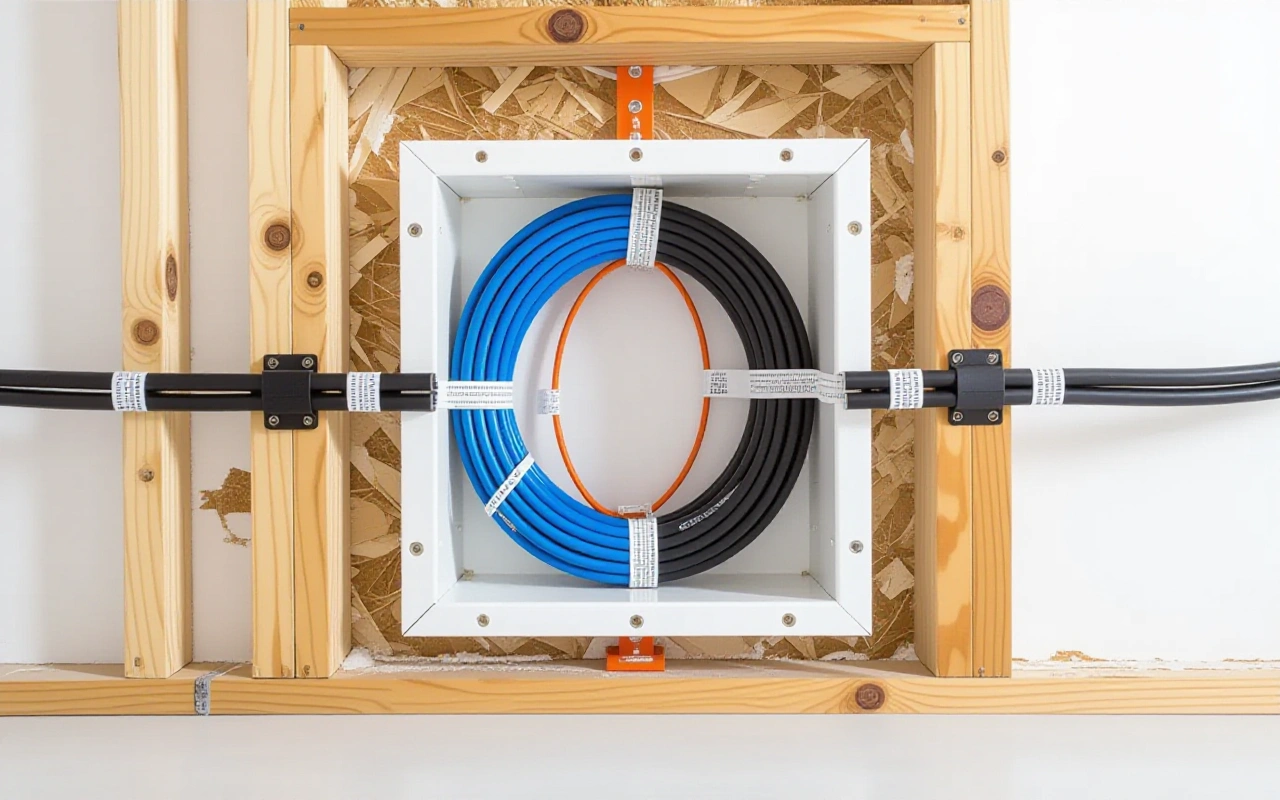
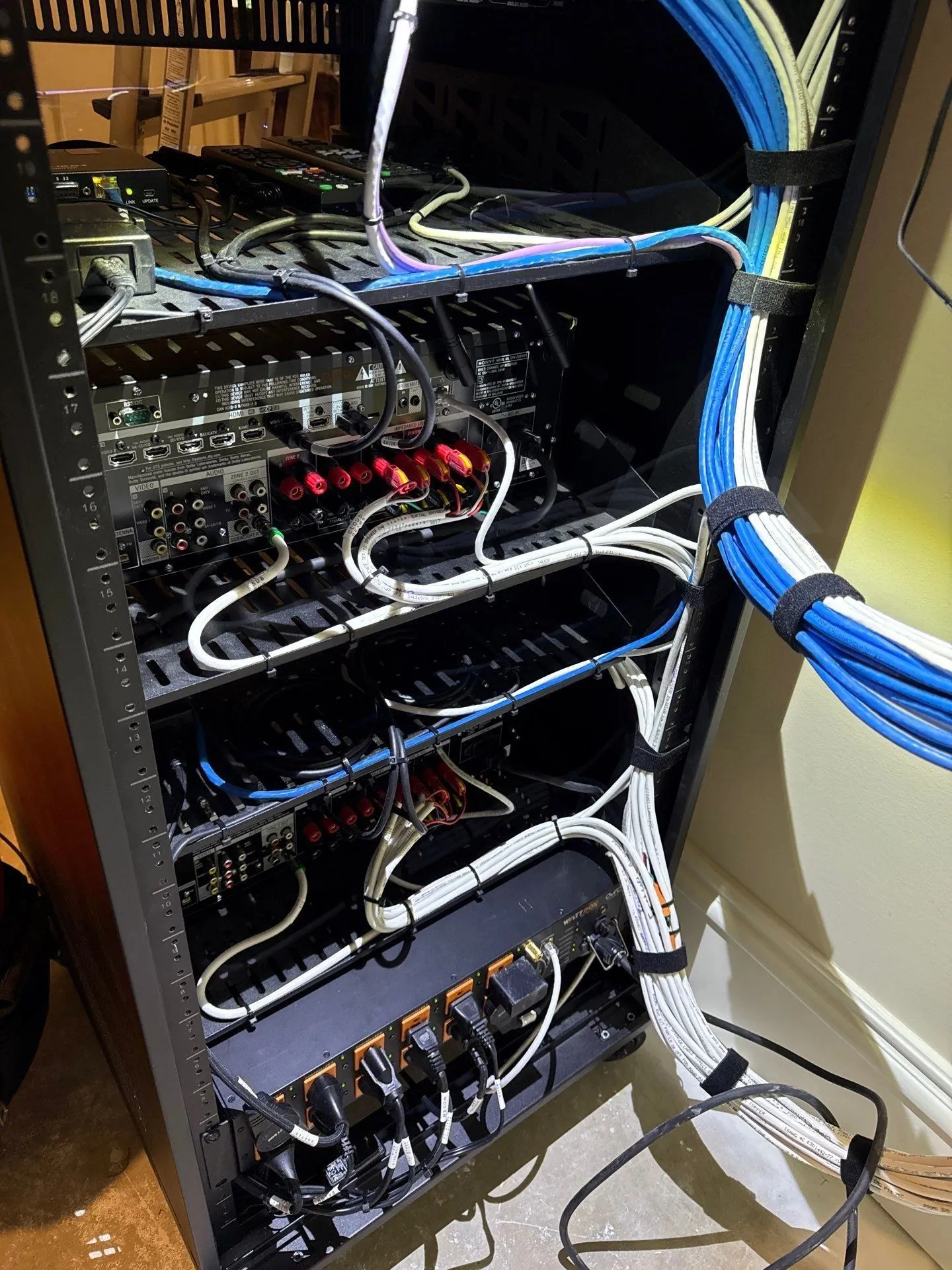
Labeled runs and a rack you can read
The photo at the top of this page is an Avant rack from behind: the blue network cable dressed in bundles, every run labeled so the next person who opens it knows which room it feeds. The old Avant site described structured cabling as reliable infrastructure for data and communication, installed for long-term performance, and a tidy rack is what that looks like in practice.
What gets wired
Nearly everything else Avant installs rides on this cable. A TV on the wall needs a network drop and its video and control runs; a ceiling access point needs a cable back to the rack; a camera under the eave needs its own run. Planning them together in the design means each one is pulled once.
- Network drops to TVs, desks and Wi-Fi access points
- Speaker wire for in-ceiling, surround and whole-home audio
- Video and control runs from the rack to each screen
- Runs for cameras and video doorbells
- Fiber to gates, pool houses and outbuildings
New construction, finished homes, churches and businesses
Cable goes in most easily at rough-in, which is why builders bring Avant in early. Avant also works in finished buildings and for businesses as well as homes. One Google review, from Kevin F., describes moving a church’s audio equipment from one room to another and leaving the space as if no one had been there. Justin has been pulling and terminating this kind of cable for more than 20 years, and every run ends in the same place: a labeled rack, like the 2 photographed on this site.
Answers
Structured Cabling: questions
What is structured cabling?
It is a planned set of cable runs — network, audio, video and control — that all home-run to one rack or panel and are labeled at both ends. It replaces wiring added one device at a time, and every other Avant system rides on it.
How much does structured cabling cost?
It depends on the number of runs and how open the walls are, so Avant prices each job from the design instead of a published rate. Reviewers mention a fair estimate and no hidden charges.
Should cabling go in before drywall?
Yes, when the house is under construction: open framing lets every run go where the design puts it. In a finished house the routes depend on the building, and the consultation is where they get worked out.
Do you wire businesses and churches?
Yes. Avant works for businesses as well as homeowners, and one Google review describes Avant moving a church’s audio equipment from one room to another.
Why label every cable run?
So anyone who opens the rack later can tell which room each cable feeds. Avant labels the runs at the rack, as in the photo on this page, which makes changes and troubleshooting faster.